

A Blood Moon Survival Guide for Astrophotographers
Anyone who has done astrophotography knows that it’s usually a game of patience. Long nights. Cold fingers. Missed focus. Clouds with suspiciously perfect timing.
But on 3 March 2026, the universe meets us halfway.
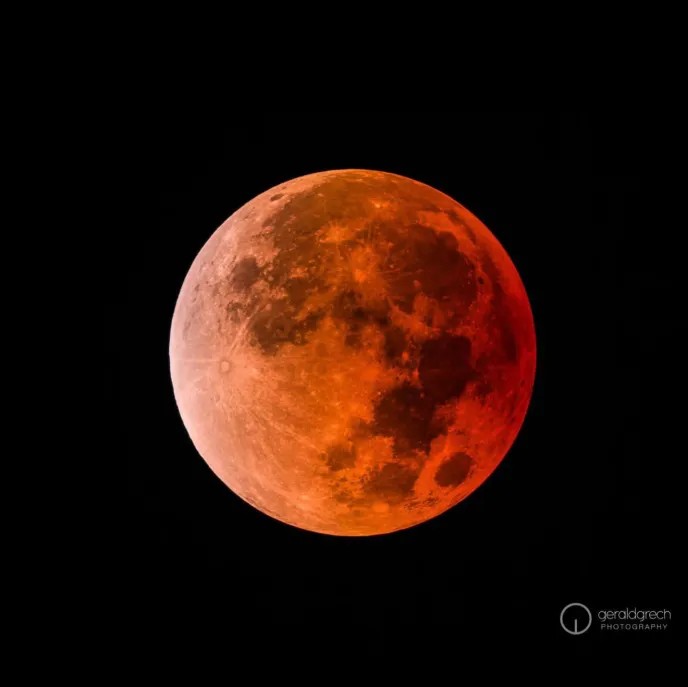
A total lunar eclipse, aka the iconic Blood Moon, is one of the most forgiving, rewarding and downright fun events an astrophotographer can shoot. During this period, there are no racing satellites, no ultra-precise polar alignment stress. Just you and the Moon, slowly changing character over a few magical hours.
If you’ve ever wanted a cosmic event that feels cinematic and achievable, this is it.
Why Blood Moons are a Photographer’s Dream
Unlike most deep-sky targets, the Blood Moon moves slowly, changing colours dramatically over time. It doesn’t require dark-sky perfection and looks incredible even from suburban locations.
It’s basically a built-in time-lapse subject with a strong narrative arc; the moon goes from:
Bright → Shadowed → Copper-red → Bright again.
You’re not just taking a photo at this point; you’re telling a story.
The Light Changes Everything (Literally)
Here’s the part that sneaks up on people.
As the Moon enters Earth’s shadow, its brightness drops significantly. During totality, you’re suddenly dealing with exposure times that feel very un-Moon-like.
You should expect:
- Longer shutter speeds
- Higher ISO than usual
- A moon that behaves more like a dim planet than a spotlight
This is where stability becomes everything.
A solid tripod, smooth tracking and good optics matter far more than peak darkness.
Why Your Optics Make or Break Eclipse Shots
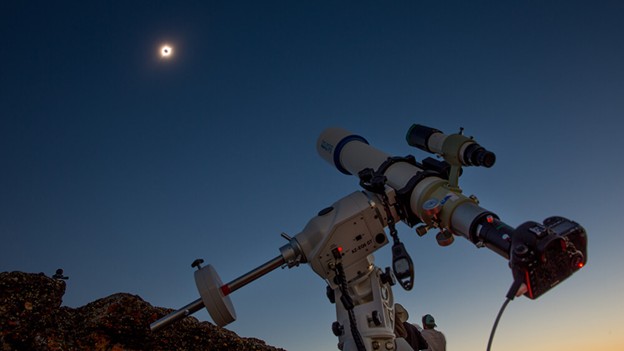
You can shoot the Blood Moon with a telephoto lens, but pairing a camera with a saxon telescope opens a whole new level of detail.
Through a telescope, you’ll capture:
- Crater that stays visible even during totality
- Texture in the red glow (it’s not a flat colour, trust me.)
- A sense of depth that makes the Moon feel physical
And if you’re scoping compositions or shooting wider context shots, saxon binoculars are surprisingly useful for planning, framing and tracking how the shadow line moves.
Good optics don’t just magnify, they CLARIFY.
The Classic Shots (and How to Make Them Yours)
Yes. Everyone loves the full red moon, the side-by-side eclipse progression we always see and the Moon rising through twilight.
So how do you stand out?
Some tips for you:
You can either try shooting through thin cloud for mood, framing the Moon with foreground silhouettes, capturing partial phases (arguably more dynamic than totality) or zooming in on crater contrast as the shadow passes.
Astrophotography isn’t about rarity, it’s about interpretation. Alas, the telescope/cameras in your hands, you can shoot whichever angle you’d like.
A Gentle Reminder
Speaking as someone who has definitely spent too much time tweaking settings while the sky did something amazing: Don’t forget to look up.
Set your interval. Lock focus. Take the shots.
Then step back and watch the eclipse unfold with your own eyes, or through the eyepiece of your scope.
The best astrophotographers aren’t just technicians. They’re observers first.
This is a low-stress WIN
Astrophotography can be humbling. But every now and then, the cosmos gives us an event that says: Relax. You’ve got this.
The 3 March 2026 Blood Moon is that event.
So, charge up your batteries. Trust your setup. Let your optics do what they’re built to do.
With clear skies and steady tripods.
Enjoy capturing one of the most photogenic moments the Moon has to offer.