

Guides
-
August 05, 2026
Golfer, Stargazer, or Birdwatcher? Find Dad's Perfect Father's Day Gift
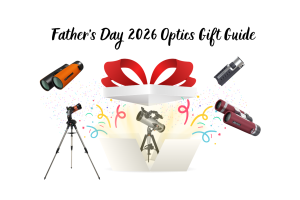
Finding a Father's Day gift that's both thoughtful and memorable doesn't have to be difficult. If your dad enjoys spending time outdoors, exploring nature, travelling, playing golf, or gazing at the stars, upgrading his gear with premium optics is a far more memorable gift he will cherish for years than another mug that says “World’s Best Dad”.
To help you skip the guesswork, we’ve put together this Father’s Day gift guide tailored to every type of outdoor enthusiast. From beginner-friendly telescopes to ultra-portable travel optics, here are the standout gifts guaranteed to give Dad a whole new perspective.
Quick Gift Finder: Matching Dad to the Right Optics
Product
Best Suited For
Standout Feature
Beginner Astronomers
Smartphone star-gazing app integration
Planet Watchers & Astrophotographers
Motorised GoTo tracking & Maksutov-Cassegrain optics
-
April 27, 2026
As autumn settles across the Southern Hemisphere, the ocean begins one of its most extraordinary annual rituals. May marks the opening chapter of whale watching season, when migrating giants reappear along our coastlines, transforming the horizon into a stage for one of nature's most awe-inspiring performances.
For marine biologists, outdoor enthusiasts and curious observers alike, this is a time of renewed attention to the sea. Different types of whales begin their long migration from Antarctic feeding grounds toward warmer waters, where they will breed, calve and nuture their young.
Why May Is So Special
While peak whale watching often stretches into winter, May holds a distinct appeal. The season’s first arrivals tend to be energetic and inquisitive as they breach, tail-slap and cruise closer to shore as they navigate familiar migratory routes. Cooler air also brings clearer atmospheric conditions, making long-distance viewing more rewarding for those equipped with quality optics.
Unlike
-
March 31, 2026
Easter is one of the most exciting times of the year in Australia. Whether you're enjoying a relaxing long weekend at home or planning a getaway, there are plenty of activities happening across the country to celebrate the occasion. From Easter egg hunts to local festivals and fun-filled outdoor adventures, Easter in Australia offers something for everyone. And if you're looking to add a bit of starry magic to your Easter weekend, StacOptics has the perfect telescopes and binoculars for stargazing after a day of festivities.
1.Easter Egg Hunts: A Tradition for All Ages
The Easter egg hunt is one of Australia’s most beloved family traditions. Children (and sometimes adults!) can be found scurrying around parks, gardens, and local attractions in search of chocolate eggs, hidden surprises, and special Easter treats. Here are some of the top places to join in on the Easter egg hunting fun:
- The Grounds Easter Egg Hunt (Sydney): The Grounds of Alexandria transforms into a magical Easter wonderland
-
February 23, 2026
Anyone who has done astrophotography knows that it’s usually a game of patience. Long nights. Cold fingers. Missed focus. Clouds with suspiciously perfect timing.
But on 3 March 2026, the universe meets us halfway.A total lunar eclipse, aka the iconic Blood Moon, is one of the most forgiving, rewarding and downright fun events an astrophotographer can shoot. During this period, there are no racing satellites, no ultra-precise polar alignment stress. Just you and the Moon, slowly changing character over a few magical hours.
If you’ve ever wanted a cosmic event that feels cinematic and achievable, this is it.
Why Blood Moons are a Photographer’s Dream
Unlike most deep-sky targets, the Blood Moon moves slowly, changing colours dramatically over time. It doesn’t require dark-sky perfection and looks incredible even from suburban locations.
It’s basically a built-in time-lapse subject with a strong narrative arc; the moon goes from:
Bright → Shadowed → Copper-red → Bright again.You’re not
-
February 23, 2026
March 2026 is shaping up to be a treat for skywatchers. As the southern skies transition into autumn, an icy visitor from the outer Solar System, the 88P/Howell Comet, makes its return; offering amateur astronomers a rare and rewarding observing opportunity around the 18th March 2026.
Comets don’t rush. They drift, glow and quietly remind us that the Solar System is still very much alive. Howell’s return is a perfect excuse to slow down, step outside after sunset and reconnect with the night sky.
What is Comet 88P/Howell?
While Howell isn’t typically a naked-eye showstopper, it’s exactly the kind of comet that shines through quality binoculars or a small to mid-sized telescope that is subtle, atmospheric and deeply