

“Hey, Look Up!”: The Blood Moon is coming (3 Mar 2026)
There are moments when the universe politely taps us on the shoulder and says, “Hey, look up!”.
On 3 March 2026, that tap comes in the form of a total lunar eclipse, better known by its dramatic nickname: the Blood Moon.
Hold up. No doomsday vibes required. No ancient prophecies unlocked. Just pure, celestial magic happening right above us.
If you’ve never watched the Moon slowly slip into Earth’s shadow, turn copper-red, and hang there like a cosmic ember… this is your sign to get ready to watch it this year.
What Is a Blood Moon, Really?
Let’s get the science bit out of the way (because science is cool).
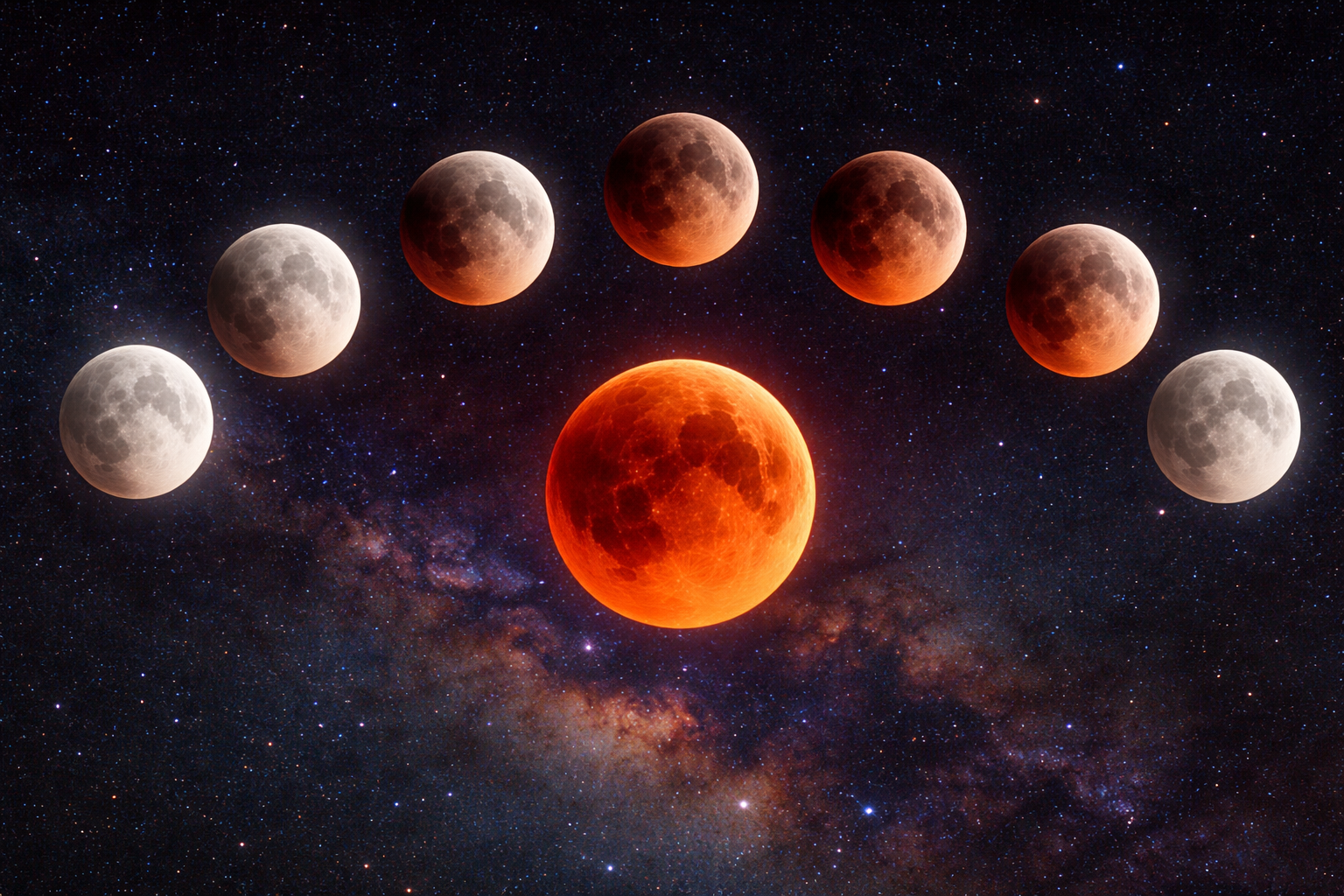
A total lunar eclipse happens when the Earth positions itself perfectly between the Sun and the Moon. As sunlight passes through the Earth’s atmosphere, shorter blue wavelengths scatter away, while longer red wavelengths bend and reach the Moon.
The result?
The Moon doesn’t disappear, instead it glows deep red.
è It’s the same reason sunsets look fiery orange. Except this time, the sunset is happening on the Moon.
And yes, it’s completely safe to watch with the naked eye. No eclipse glasses required.
Why This Eclipse Is Worth Staying Up For
Unlike solar eclipses, lunar eclipses are
- Easy to observe
- Slow and relaxing
- Visible across large regions of the world
- Perfect for beginners and seasoned stargazers
This one on 3 March 2026 is a total eclipse, meaning the Moon will fully enter Earth’s shadow and stay there long enough for you to really soak it in.
PS: This means plenty of time to grab a drink, set up your gear and feel like an astronomy pro! Even if it’s your first time.
Naked Eye vs Optical Gear: The Real Difference
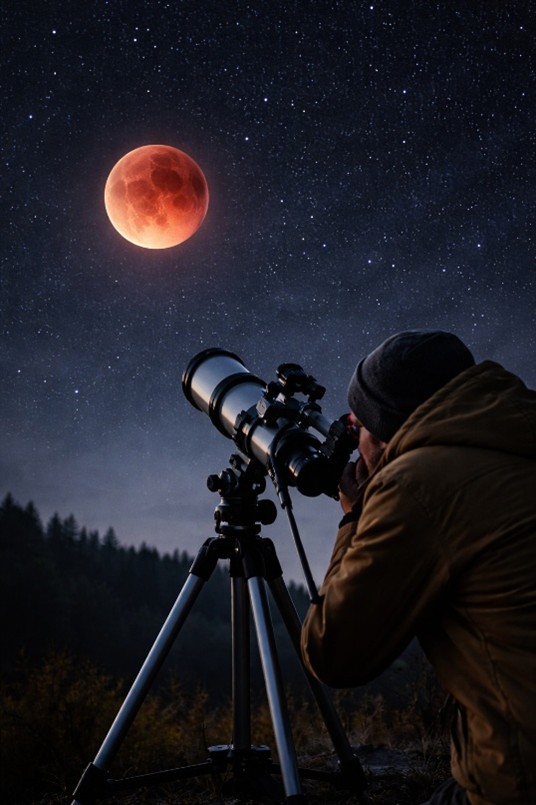
Sure, you can watch the Blood Moon with just your eyes. But if you want to really experience it, optics change everything and make a big difference.
With a pair of saxon binoculars, you’ll notice the subtle colour variations across the lunar surface, craters fading and reappearing as the shadow moves and to state the obvious, a three-dimensional depth that photos can never really capture.
Step it up with a saxon telescope and suddenly you can track the shadow line crawling across maria and crater rims, the red glow looks richer, darker and more dramatic. The Moon will feel close… almost like it’s touchable.
It’s the difference between seeing a concert from the backrow and standing on stage.
A Perfect First Telescope Moment
If you’re new to astronomy, lunar eclipses are basically the gateway event.
There’s no complicated tracking, no need for dark-sky locations and no panic about alignment or filters.
A beginner-friendly saxon telescope lets you practice focusing on a bright and easy target, learn how the Earth, Moon and Sun geometry works in real time and build confidence before diving into planets, nebulae or galaxies.
It is the perfect time for you to pick up this new hobby you’ve always been thinking about. This is your sign.
And if you already own a telescope?
This is one of those nights where it earns its shelf space. What are you waiting for?
How to Make the Most of Eclipse Night
Here are a few tips I’d give from past experience:
- Set up early and let your eyes adjust
- Bring binoculars and telescopes if you have them
- Take photos (but don’t forget to just watch and experience the moment)
- Invite friends. Astronomy is better shared.
And maybe just maybe, take a moment to appreciate that you’re watching orbital mechanics play out live, in real time with zero special effects.
Final Thoughts: Don’t Sleep Through This One
The upcoming Blood Moon isn’t just an astronomical event; it’s a reminder that space isn’t distant or abstract. It’s active. It’s dynamic. And sometimes, it puts on a show just for us. So, whether you’re a student, a science nerd, a casual sky-watcher or someone who just likes cool red moons, THIS IS YOUR NIGHT.
Set your alarm. Grab your optics. Look up. The universe has plans for us.